









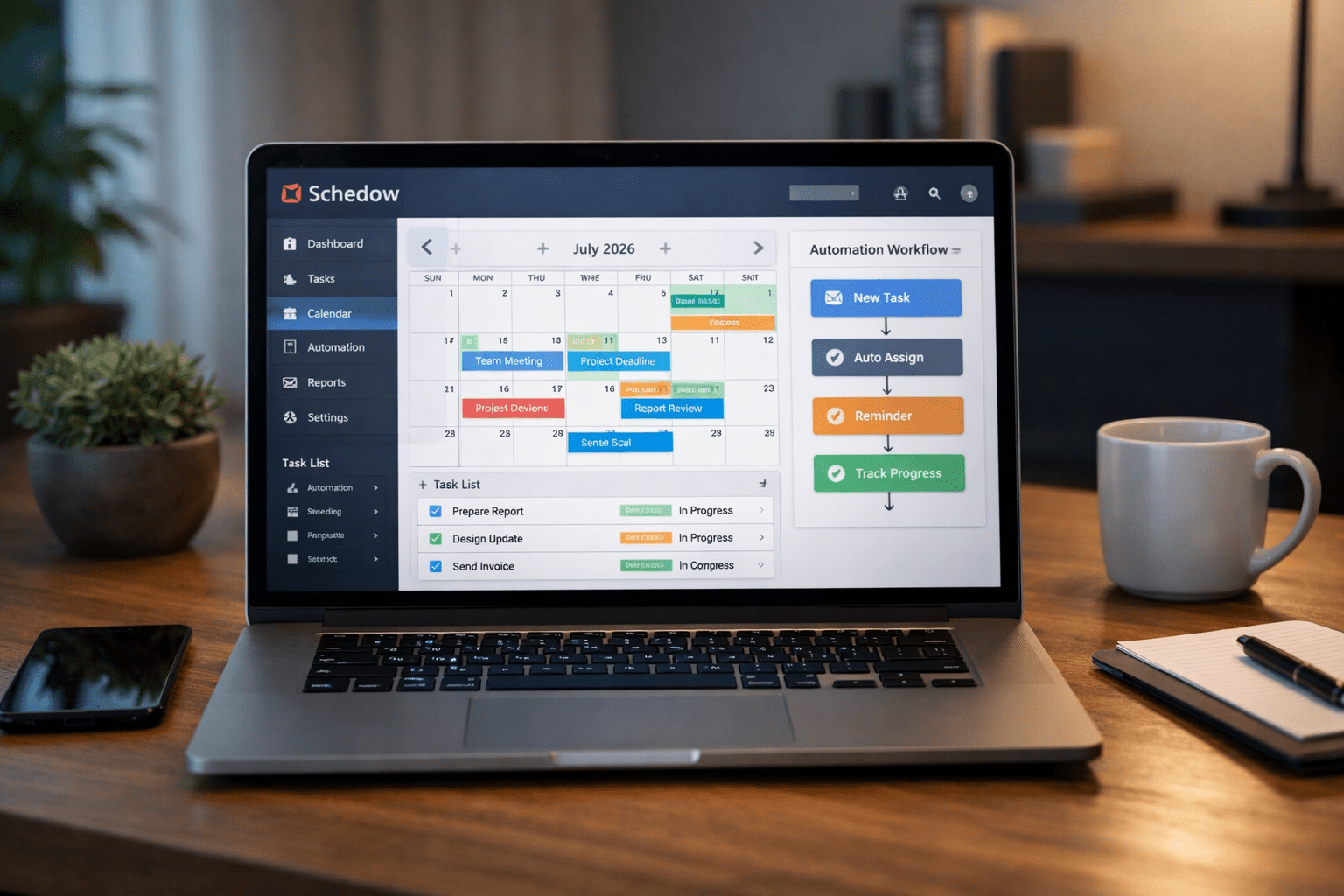
Schedow is a modern scheduling and workflow management system designed to help individuals and teams organize tasks, automate processes, and manage time more efficiently. In simple words, it works like a smart planner but with much more power. It does not just remind you of tasks. It helps you complete them in a better and more structured way.
Here’s the thing. Most people struggle to manage time, juggle tasks, and stay consistent. I have faced this myself. Deadlines get missed. Tasks slip through. Tools feel complicated instead of helpful. That is exactly where Schedow comes in. It simplifies your work, reduces stress, and gives you a clear system to follow every day.
What Exactly Is Schedow?
Schedow is a digital scheduling and workflow automation tool. It helps you plan tasks, assign work, and track progress in one place.
Instead of writing notes manually or using multiple apps, Schedow keeps everything organized. You can see your entire workflow clearly without confusion.
Think of it as a reliable assistant that keeps your work structured at all times.
How Schedow Works (Step-by-Step)
Permit’s damage it down in an easy manner.
- Setup
You create your account and add your tasks or workflows. - Scheduling
You assign deadlines, priorities, and timelines. - Automation
Tasks can trigger actions automatically, like reminders or updates. - Monitoring
You track progress and make changes when needed.
From my experience, this removes mental pressure. You no longer keep everything in your head. The system handles it.
Key Features of Schedow
Schedow offers practical features that solve real problems:
- Task automation to reduce manual effort
- Real-time updates to stay informed
- Cloud access to work from anywhere
- Team collaboration for shared workflows
- Integration with other tools
These features are useful for anyone managing multiple tasks daily.
Benefits of Using Schedow
One of the biggest problems today is overload, too many obligations, and not enough time.
Schedow helps by:
- Saving time through automation
- Improving productivity
- Reducing mistakes
- Keeping teams aligned
- Growing with your needs
From what I have seen, the biggest benefit is clarity. When your work is organized, your stress goes down.
Schedow vs Traditional Systems
Traditional scheduling methods often create confusion.
Spreadsheets, notes, and reminders can become hard to manage.
Schedow improves this by offering:
Manual tracking vs automated workflows
Higher error risk vs accurate systems
Limited access vs cloud-based access
Time-consuming vs time-saving processes
Once you switch to a structured system, it becomes difficult to go back.
Real-World Use Cases of Schedow
Schedow works for different types of users.
Businesses use it to manage teams and deadlines.
Freelancers use it to handle multiple clients.
Agencies use it to track campaigns and deliverables.
Remote teams use it to stay connected and organized.
I have worked with teams where communication was unclear, and tasks were scattered. After using structured scheduling systems, everything became smoother. Less confusion and better results.
Schedow in 2026: What’s Changing?
Schedow tools are improving quickly.
Some key trends include:
- AI-based scheduling
- Predictive task management
- Smart workload balancing
- Better integration with productivity tools
This means the system can adapt and improve your workflow over time.
Hidden Challenges of Schedow
No tool is perfect, and Schedow also has challenges.
- Beginners may find it confusing at first
- Too much automation can reduce flexibility
- Over-dependence on tools can create problems
- Data privacy needs attention in cloud systems
I have seen people rely too much on tools. When something goes wrong, they struggle. It’s miles important to apply the equipment accurately.
How to Choose the Right Schedow Setup
Selecting the right setup depends on your wishes.
Small teams should keep things simple and focus on basic features.
Large businesses should look for scalability and integrations.
Freelancers should prioritize ease of use.
A common mistake is choosing too many features at the start. Keep it simple first, then expand.
Learn about: What is Trucofax? The Secret Weapon for Pro Gamers in 2026
Pro Tip: My Personal Take
From my experience, the biggest mistake people make is trying to automate everything too quickly. I have done this myself, and it created more problems than solutions. You lose control and spend more time fixing issues. Start with simple scheduling and understand your workflow first. Then slowly add automation. This can work better in the long run.
Is Schedow Worth It?
Schedow is worth it if you use it properly.
It is ideal for people who feel overwhelmed with tasks, teams that need better coordination, and businesses that want to improve efficiency.
However, if you prefer very simple systems, it might feel complex.
FAQs
What is Schedow used for?
Schedow is used to organize tasks, automate workflows, and manage schedules efficiently.
Is Schedow free or paid?
Some versions may be free, but advanced features usually require payment.
How is Schedow different from other tools?
Schedow focuses more on automation and structured scheduling compared to basic task tools.
Can beginners use Schedow easily?
Yes, but there can be a learning curve in the beginning.
Is Schedow safe to use?
Most platforms are secure, but users should always check privacy settings and data policies.
Conclusion
Schedow is not just a scheduling tool. It is a system that helps bring order to your daily work. When tasks are clear and organized, everything becomes easier to manage.
From my experience, the real value comes from how you use the system. If you use it with the right approach, it can improve productivity, reduce stress, and help you stay consistent. If you have been struggling with time management or workflow issues, trying Schedow could be a practical step forward.